Mix, Measure, & Pour
From bubbling potions to rainbow recipes, kids love mixing things up! In Mix, Measure & Pour, we dive into the exciting world of hands-on chemistry where young scientists experiment with combining, counting, and creating. These activities help children explore states of matter, practice accurate measuring, and observe cause and effect in action. With tools like beakers, droppers, funnels, and spoons, they’ll feel like real lab assistants as they stir up curiosity and discover how ingredients interact. This subcategory brings joyful, messy, meaningful play to life through early chemistry concepts.
Want to explore how this unit fits into our Chemist career track? Check out “I Can Be a Chemist.”
Mixing, pouring, and measuring aren't just fun—they build real-world skills in math, science, and problem-solving. From following simple recipes to estimating volumes, these activities foster early numeracy, observation, and planning. Kids will also learn to work patiently, take turns, and explore the scientific method in playful, approachable ways. Whether it’s sensory science or fizzy reactions, there’s always something new to discover with a spoon in hand.
In the STEAM Spotlight
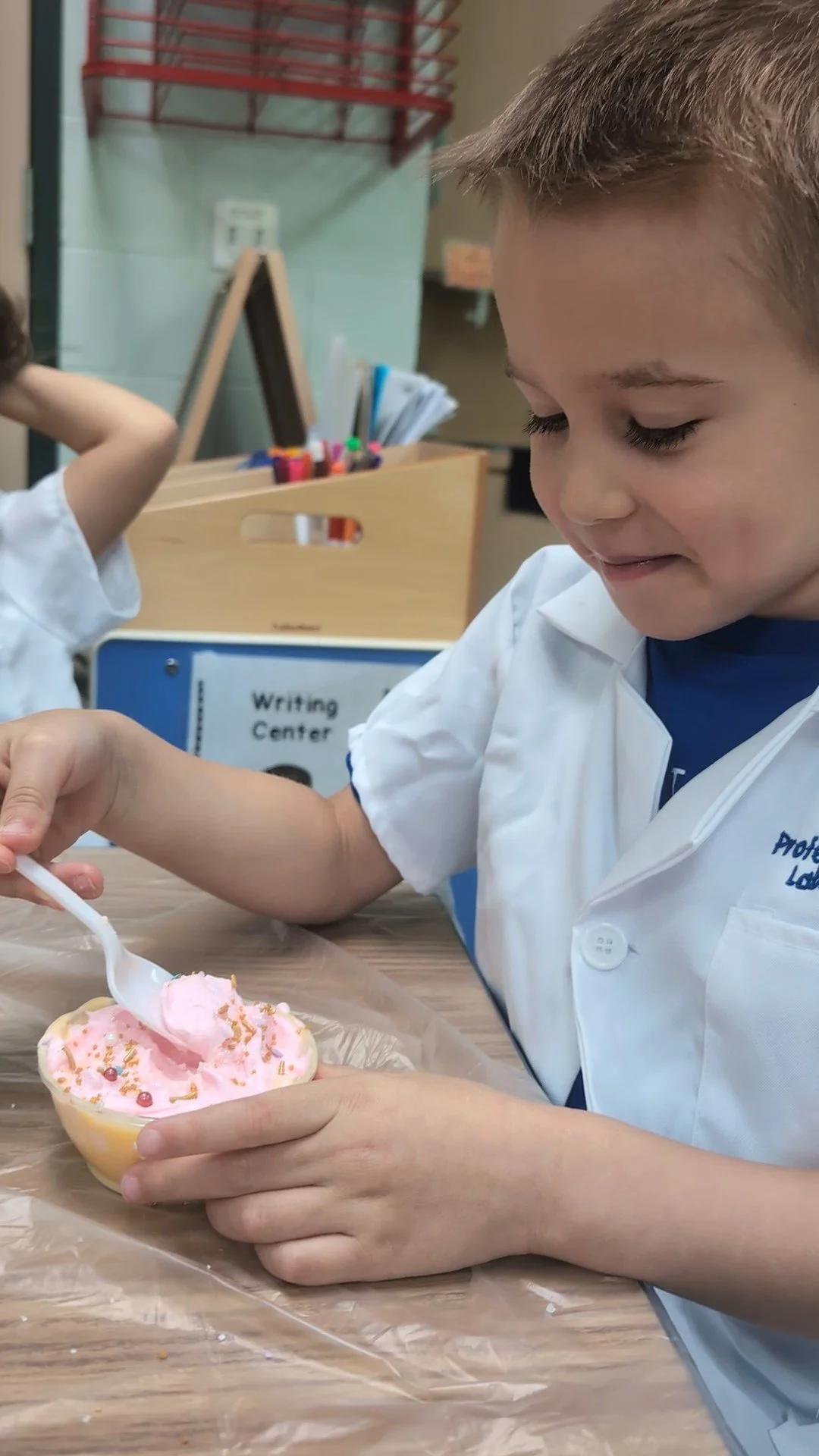
Mad Scientist Pudding Potions
Get ready to become a real mad scientist in this sweet and colorful adventure! Kids will mix up instant pudding, then experiment by adding drops of food coloring to create swirls, layers, and gooey “potions” that look like they came straight from a laboratory. They’ll get hands-on experience with measuring, stirring, and observing how liquids change as they mix together, all while exploring creativity and cause-and-effect.
This messy, magical activity sparks curiosity and lets young scientists see science in action—plus, it’s tasty too!
Supplies for this activity include instant pudding mix, milk, mixing bowls, spoons, and food coloring. Everything is provided for a safe and fun hands-on experience where kids can explore without worrying about cleanup.
This activity teaches real-life skills like following directions, measuring, mixing, and experimenting safely. Children learn to observe changes, predict outcomes, and make creative choices while enjoying a delicious reward for their efforts. It’s a perfect blend of science, art, and a little bit of kitchen chemistry.
Exploring STEAM Stations
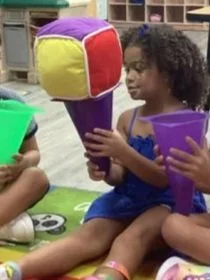
Dice Catch Challenge
Ready, set, catch! In this energetic circle game, children pass around a jumbo soft die—but there’s a twist: they use small kid-sized traffic cones to catch it instead of their hands. This playful challenge boosts hand-eye coordination, encourages teamwork, and helps young learners develop focus and timing. It’s a simple way to get kids moving while subtly strengthening gross motor control and spatial awareness.
Check out these kid traffic cones on Amazon – they’re the perfect size for little hands.
Pom-Pom Ice Cream Sensory Bin
Scoop, sort, and serve! This colorful sensory bin invites children to play pretend as ice cream chefs, using tools like scoops, tongs, and measuring cups to transfer pom-poms into bowls and cones. As they mix “flavors,” compare sizes, and fill orders, they naturally explore important skills like volume, quantity, and fine motor control. It’s hands-on fun that introduces early measurement concepts in a playful, low-pressure way.
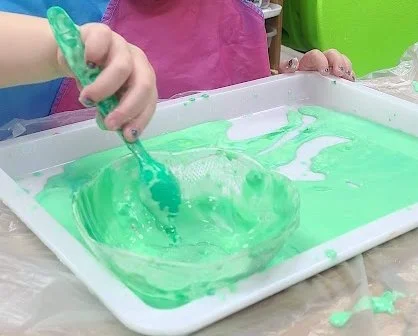
Oobleck Lab: Stir, Squish, and Scoop!
I brought out the cornstarch and water with zero expectations—just an invitation to explore. What happened next was chaos in the best way. Kids mixed their own oobleck with food coloring, comparing what happened when they added too much water or too little. We talked about solids and liquids, but mostly they just felt it—some scooped with spoons, some dug in with hands, and a few just watched it drip in slow-motion awe. The mess was worth every second. They were measuring, testing, and adjusting without needing a worksheet. Just pure, squishy science.
These baby spoons are the perfect science tool for kids!
Scrub-a-Dub Kitchen Lab
Sometimes, the best sensory play is the simplest. I set out trays filled with warm, soapy water and added a handful of play kitchen toys—measuring cups, spoons, pretend food, and little dishes. The kids dove right in, scooping and pouring with serious concentration, pretending to wash dishes or cook up foamy soups. It’s the kind of quiet, focused play that sneaks in fine motor practice and early measuring skills. The bubbles made it feel like magic.
Potion Lab: Color Mixing Play
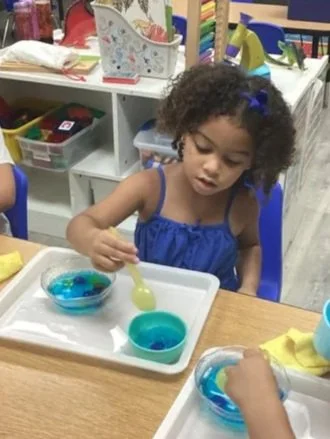
In this calming yet captivating STEAM Spotlight, children are invited to explore the magical world of liquid motion. Using trays filled with bowls, pipettes, cups, and colored water, they mix, pour, and transfer at their own pace. Inspired by Montessori pouring work, this activity encourages fine motor skills, self-direction, and curiosity. As they blend colors and test their own hypotheses, little scientists engage in meaningful play that supports focus and independence.
Each child gets a tray with a few clear bowls or cups, a pipette or dropper, a small pitcher or measuring cup of water, and a few drops of food coloring. Add a towel under each tray to support easy cleanup. Adults can model one or two transfers, then step back and let the child take the lead.
This activity builds more than motor coordination—it cultivates independence, patience, and observational thinking. As children notice cause and effect (What happens when red meets blue?), they build the groundwork for understanding chemical mixtures and transformations. The slow, intentional movements mimic those used in real-world lab settings, teaching kids to respect tools, materials, and their own discoveries.
How Big Are My Feet?
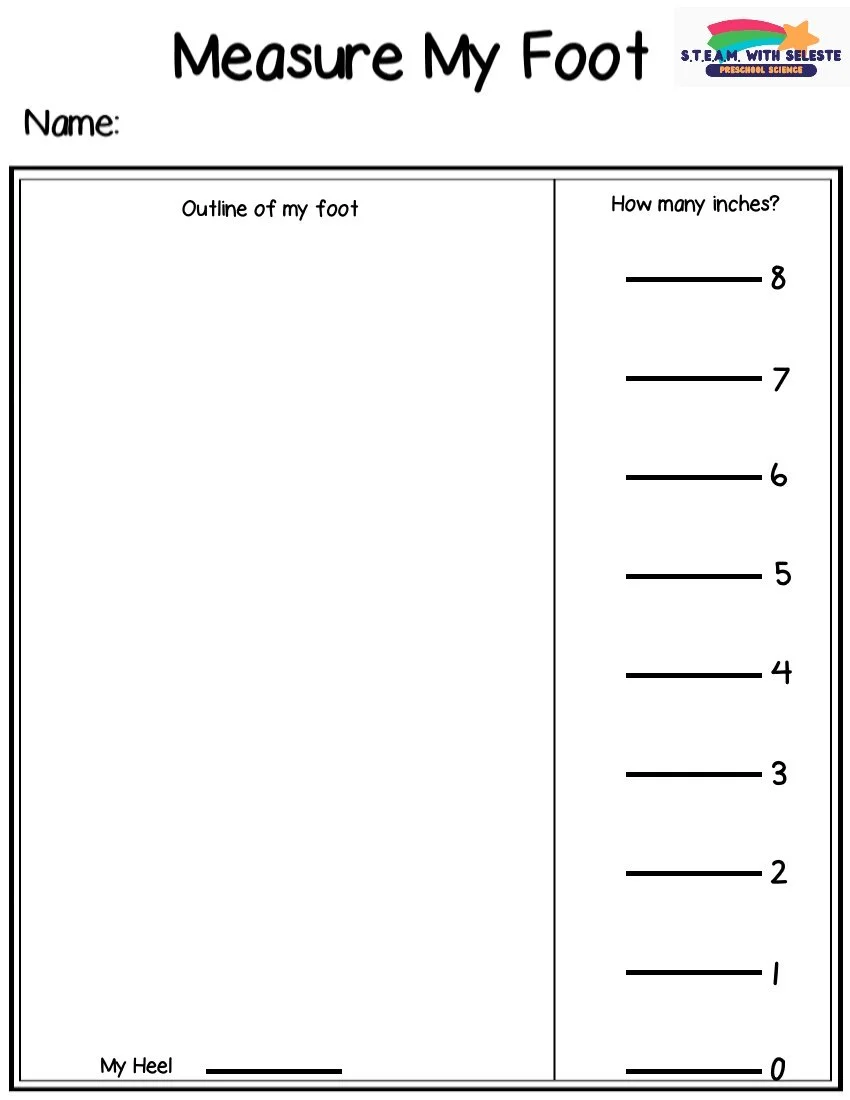
This hands-on measuring activity always gets giggles! Kids trace their feet on paper, then use cubes, blocks, or rulers to measure how long they are. It’s an easy way to introduce non-standard measurement while encouraging body awareness and comparison. “Whose feet are longer?” becomes a whole-class investigation! I created a simple worksheet you can print and use again and again—perfect for your home, classroom, or homeschool setup.
Books for “Mix, Measure & Pour”
Books turn messy moments into meaningful learning. Reading about measurement and mixing helps children understand the why behind the wow—connecting sensory experiences to real-world skills. These stories build early math literacy, emotional bonding, and vocabulary, all while tying beautifully into hands-on STEAM play.
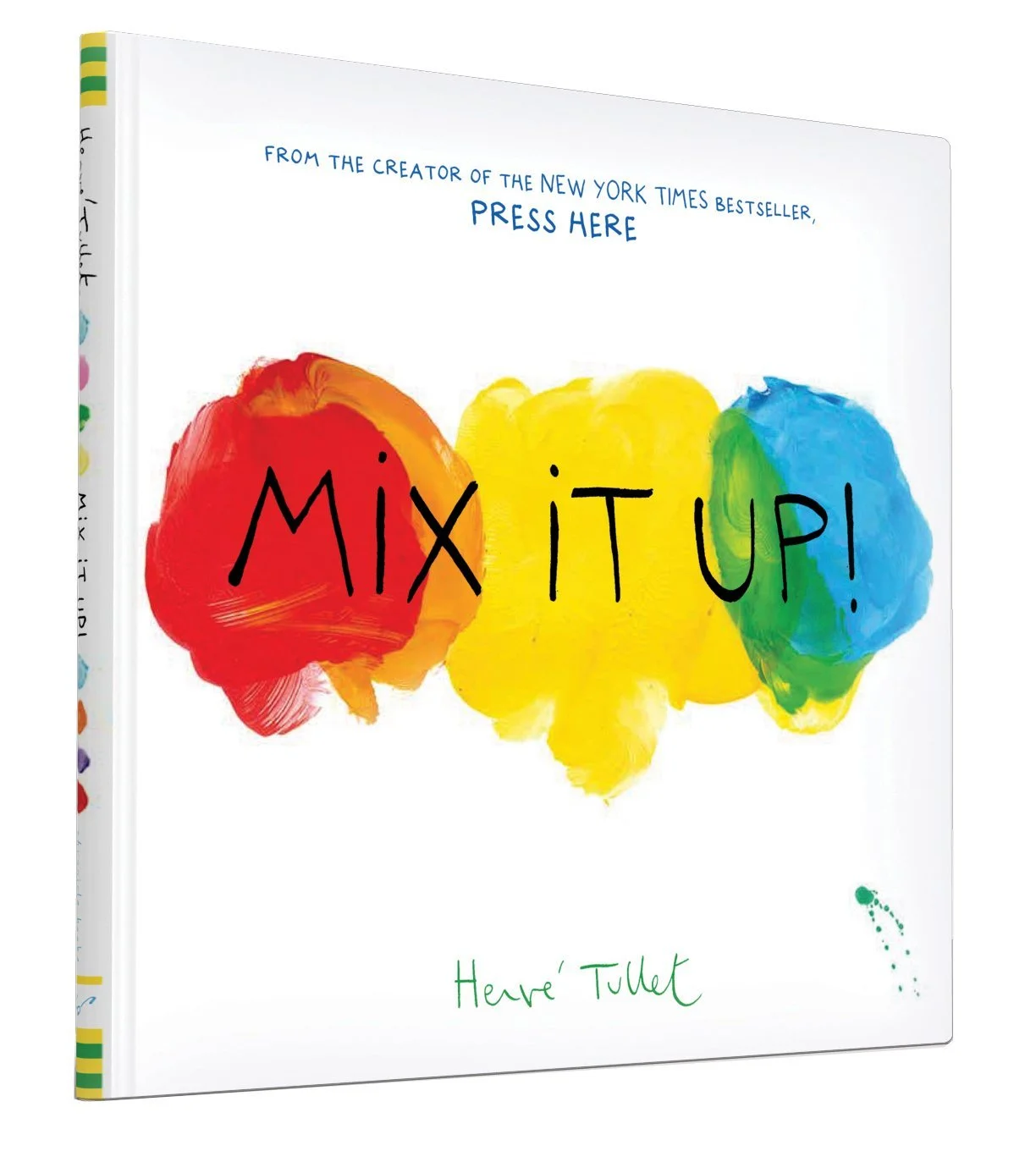
This interactive book invites toddlers to tap, smear, and shake colors on the page as they mix paint “magically” with their fingers. It’s a joyful, tactile experience that reinforces cause and effect while introducing basic mixing concepts—no mess required! Perfect for pre-readers and budding artists who are just beginning to experiment with pouring and combining.
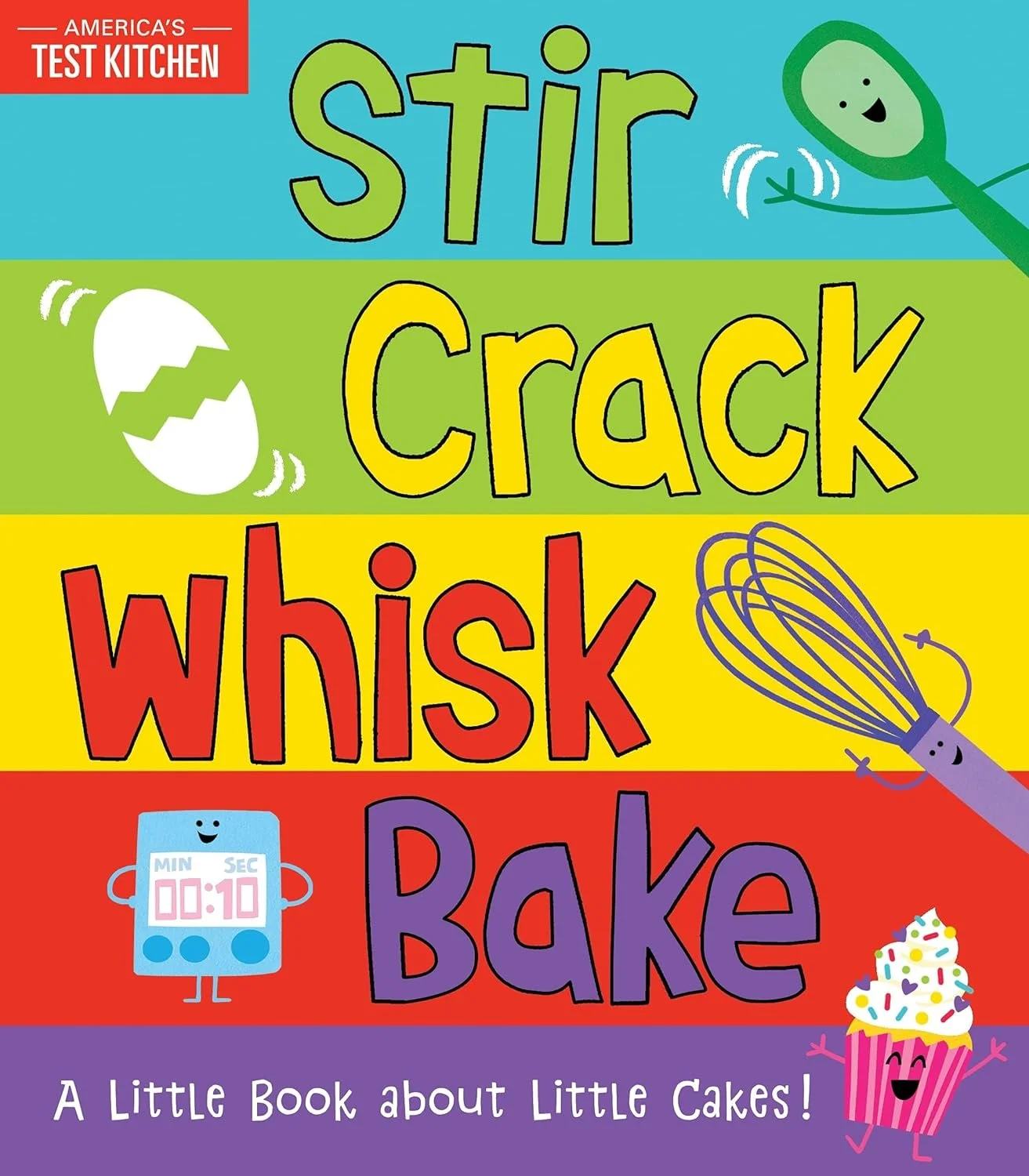
A delightful board book that introduces young children to simple cooking and measuring tools through tactile, interactive prompts like “stir,” “crack,” “whisk,” and “bake.” The visuals clearly show ingredients, mixing steps, and tools, making early measurement concepts approachable and fun. Perfect for shared reading with little helpers in the kitchen.

This humorous story shows a mouse and an elephant trying to balance on a seesaw, then gathering many friends to tip the scale. Through this playful narrative, kids learn how non-standard units—like stacking shoes or friends—can measure weight. It's a clever introduction to comparison, accumulation, and early quantitative thinking.
Digital Downloads
Our digital downloads bring hands-on learning right to your fingertips—no shipping, no waiting! These printable activities, worksheets, and guides are designed for busy families and educators who want quick, easy, and engaging STEAM experiences. Simply download, print, and watch curiosity and creativity unfold anytime, anywhere.
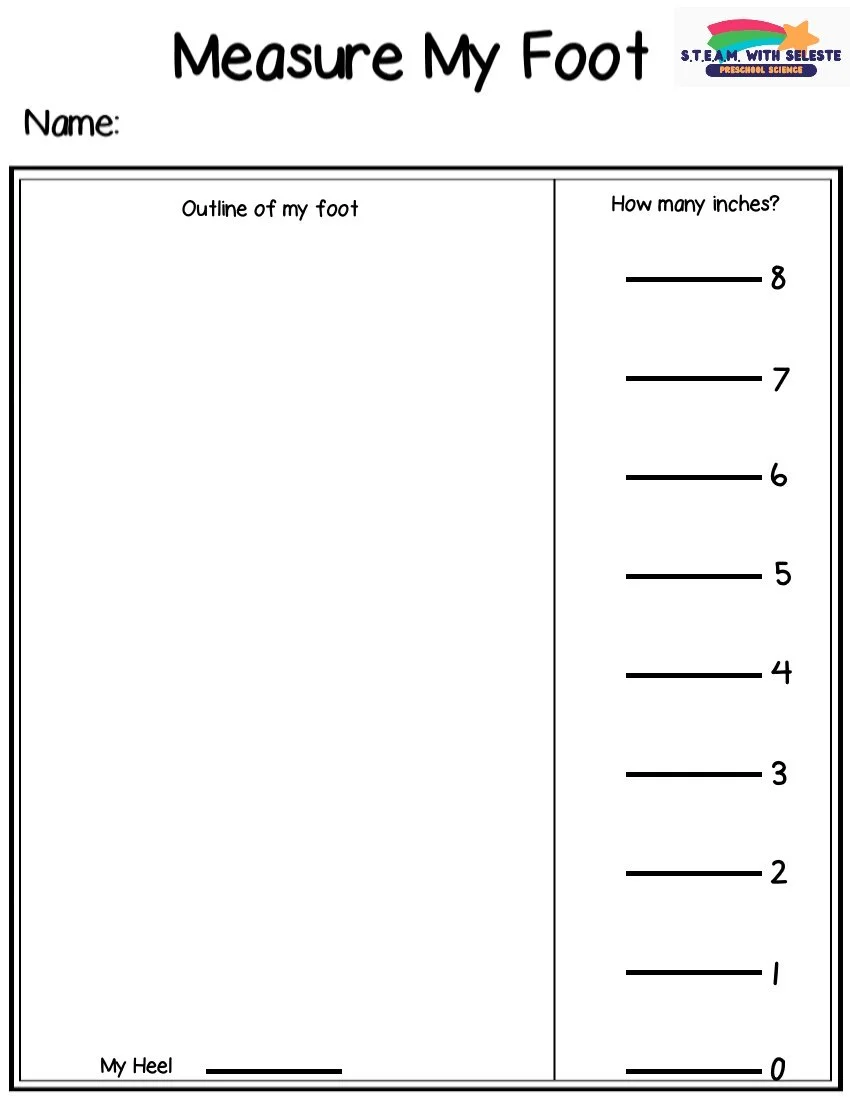
Get kids moving, measuring, and comparing with this fun, hands-on worksheet! Children trace their own feet and use blocks, cubes, or rulers to find out just how big their footprints really are. It’s a simple way to introduce non-standard measurement and spark curiosity about size and comparison. Perfect for classroom, homeschool, or at-home play.
