Fantastic Fossils
Fantastic Fossils invites preschoolers to travel back in time and discover the clues Earth left behind. Fossils are like nature’s photographs—tiny snapshots of plants and animals that lived long, long ago. Through hands-on exploration, simple experiments, and playful storytelling, children learn how fossils form, where scientists find them, and why they matter. This topic builds early science vocabulary while sparking curiosity about dinosaurs, ancient seas, and the ever-changing planet beneath our feet.
Designed especially for young learners, Fantastic Fossils blends sensory play, observation, and imagination to support early STEAM skills. Preschoolers practice asking questions, comparing shapes and textures, and thinking like real scientists—without even realizing they’re learning. Fossil activities strengthen fine motor skills, encourage patience and focus, and connect kids to Earth science in a joyful, age-appropriate way. Curiosity gets muddy, brains get busy, and science becomes an adventure worth digging into.
In the STEAM Spotlight
Plaster of Paris Dino Dig
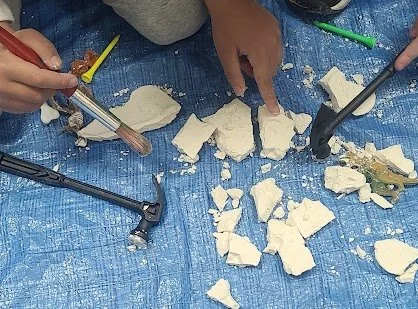
Our Plaster of Paris Dino Dig turns preschoolers into pint-sized paleontologists with big curiosity. We poured Plaster of Paris into molds, carefully placed toy dinosaurs inside, and let time do its quiet science magic. Once hardened, these “fossil blocks” become excavation sites where children uncover hidden dinosaurs, just like scientists digging up fossils from ancient rock layers. The setup feels mysterious and exciting, instantly pulling kids into a story of the past.
When it’s time to dig, children use small hammers to gently break apart the plaster and rescue their dinosaurs. This activity builds fine motor strength, hand-eye coordination, and patience while introducing cause-and-effect and problem-solving skills. Kids learn that discovery takes care, focus, and persistence—and that science can be noisy, messy, and wildly fun. It’s controlled chaos with a purpose, and exactly how deep learning loves to show up.
Exploring STEAM Stations
Gummy Bear Fossil Sandwiches
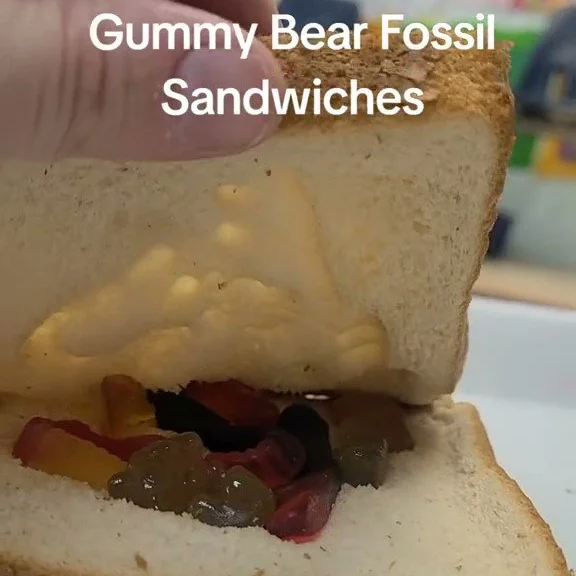
The Gummy Bear Fossil Sandwich activity helps preschoolers understand how fossils form using a simple, squishy, and unforgettable experiment. Children place gummy worms between slices of bread, press them together, and leave them overnight to model how pressure over time creates fossil imprints. When the bread is lifted the next day, kids observe the shapes left behind and learn that fossils are often imprints, not bones. This playful Earth science activity builds observation skills, introduces cause and effect, and makes complex fossil concepts clear, concrete, and deliciously memorable for young learners.
Fossil Sensory Bin
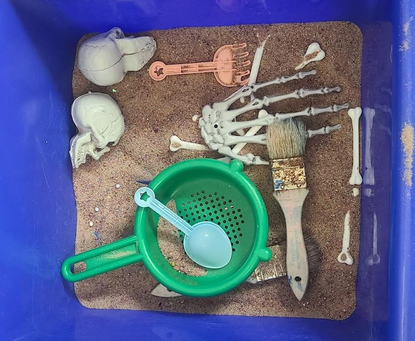
Our Fossil Sensory Bin turns preschoolers into mini paleontologists with hands-on exploration and imaginative play. Children dig through sand using sifters and brushes to uncover hidden plastic bones, mimicking the careful work of real scientists at a dig site. This activity builds fine motor skills, hand-eye coordination, and patience while introducing early Earth science concepts in a fun, tactile way.
Kids practice observation, problem-solving, and teamwork as they carefully excavate each bone, discovering how fossils can be hidden and revealed over time. Perfect for dinosaur units, fossil-themed STEAM lessons, or sensory-rich classroom centers that make science engaging and memorable for young learners.
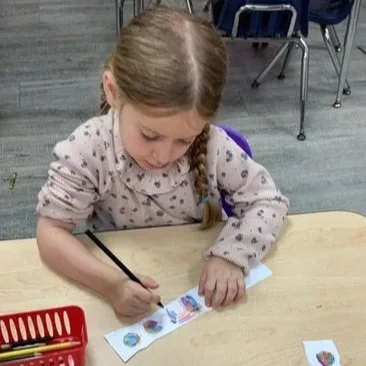
Fossil Bracelets
The Fossil Bracelets activity lets preschoolers combine creativity and science by making wearable fossils. Children print out sheets of fossil images, cut them into strips, and assemble their own bracelets, learning about different fossil shapes and types as they craft. This hands-on STEAM activity supports fine motor skills, pattern recognition, and early science vocabulary, making fossils tangible, fun, and part of everyday play.
Buy the template at Teachers Pay Teachers
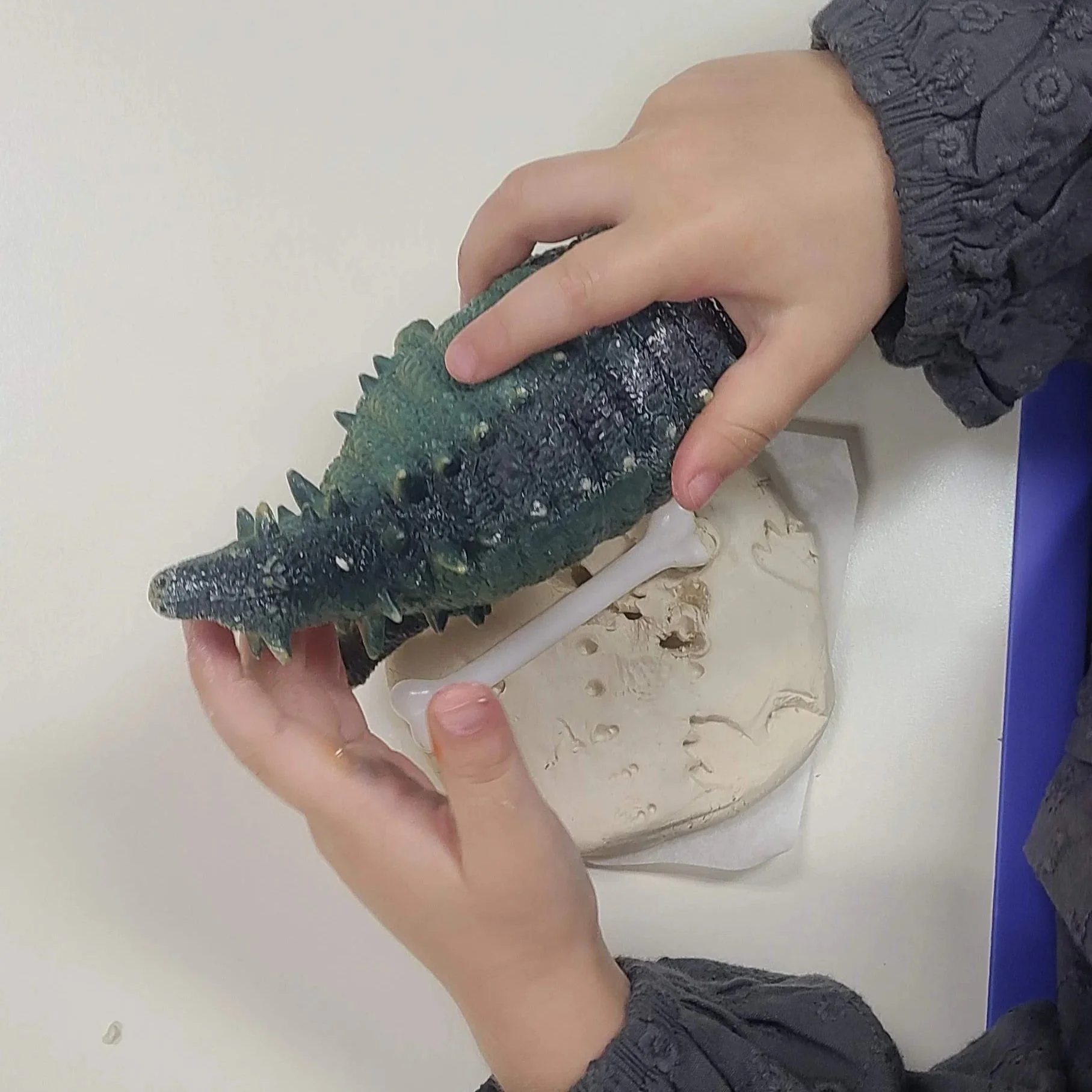
Air Dry Clay Fossils
Our Air-Dry Clay Fossils activity lets preschoolers create their own “fossils” using air-dry clay and toy dinosaurs or bones. Children press the toys into the clay to make imprints, then lift them to reveal detailed fossil shapes, mimicking how real fossils preserve ancient life. This hands-on activity strengthens fine motor skills, encourages careful observation, and introduces basic Earth science concepts in a playful, age-appropriate way.
As the clay dries, kids can paint or decorate their fossil imprints, adding a creative twist that connects art with science. This activity builds curiosity, problem-solving, and early STEAM thinking while giving young learners a tangible way to explore prehistoric life.
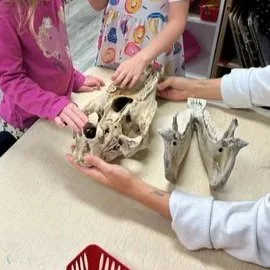
Exploring Our Cow Skull
Bertha, our real cow skull, made another appearance this week as we explored fossilized bones and shells. Though this bone is not a fossil, its an amazing experience for kids to get a chance to touch and feel what real bone is like.
The kids were amazed by the size of the teeth and asked questions like “Where do the eyes go? What’s that part for?”
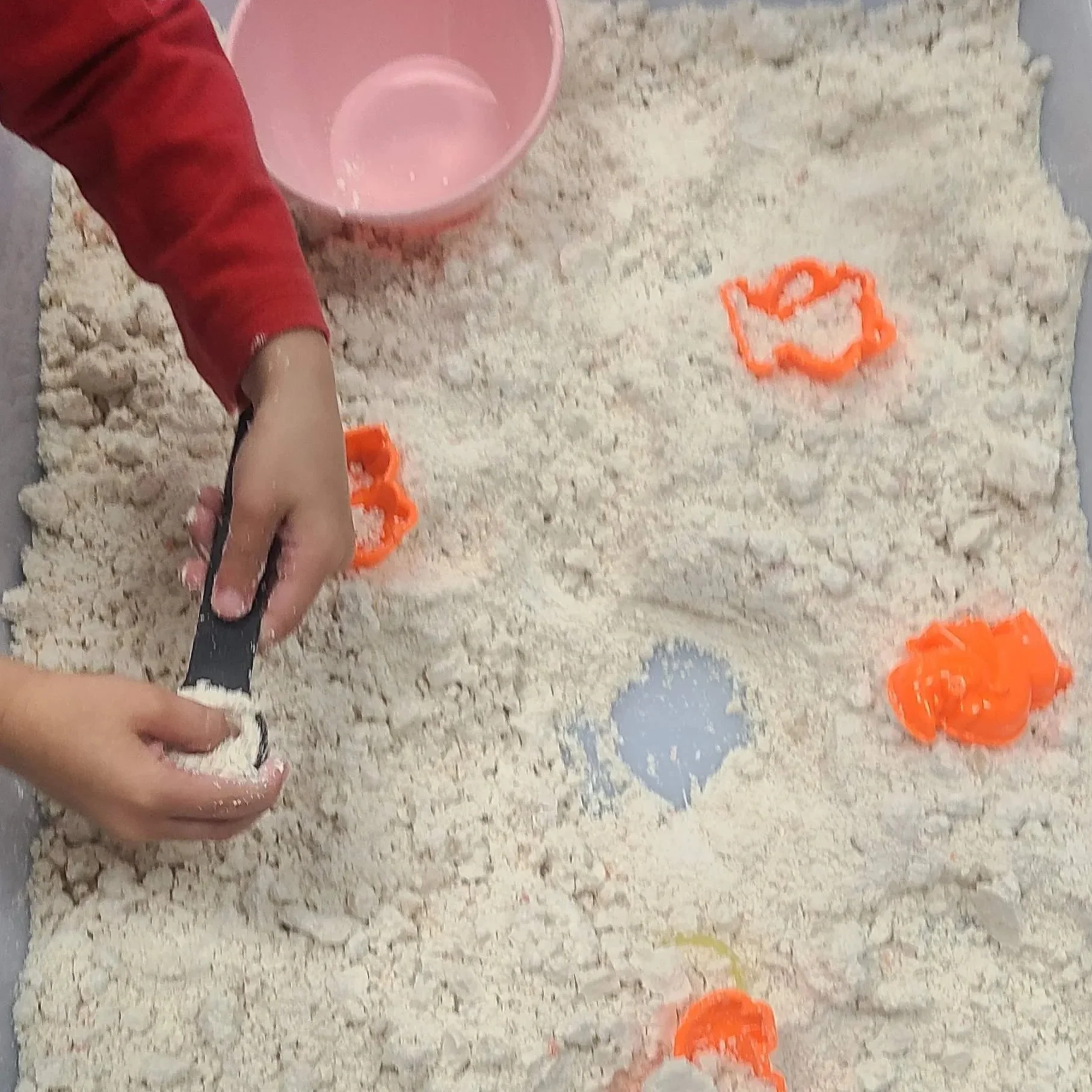
Kinetic Flour Sensory Bin
Our Kinetic Flour Sensory Bin activity gives preschoolers a hands-on way to explore fossils and shapes using a simple flour-and-oil mixture that behaves like kinetic sand. Children press playdough molds into the mixture to create impressions that hold their shape when squeezed but crumble easily, mimicking how delicate fossils are formed and preserved. This sensory STEAM activity encourages tactile exploration, fine motor development, and early Earth science learning in a playful, engaging way.
Kids experiment with squeezing, molding, and crumbling, discovering cause-and-effect while building patience, observation skills, and creativity. Perfect for fossil units, hands-on sensory bins, or classroom centers that make science fun, interactive, and memorable.
Recipe:
Ingredients:
2 cups all-purpose flour
1/2 cup vegetable or baby oil (can substitute coconut oil for a natural scent)
Instructions:
Pour the flour into a large mixing bowl.
Gradually add the oil, stirring with a spoon or your hands until the mixture is evenly coated and holds together when squeezed.
Test the texture by squeezing a handful—it should hold its shape but crumble easily when poked. Adjust with a little more flour if too oily, or more oil if too dry.
Provide small playdough molds, cookie cutters, or toy dinosaurs for children to press into the mixture and create fossil-like impressions.
Tips:
Store in an airtight container between uses to keep it soft.
Add a few drops of food coloring if you want colorful “fossil sand.”
Always supervise younger children to prevent ingestion.
Bake the flour prior to use to kill any bacteria that may be present in raw flour
This recipe creates a safe, tactile material that’s perfect for molding, pressing, and crumbling—just like real fossil excavation!
Fossil BINGO
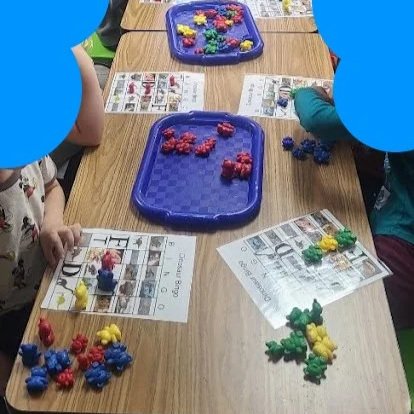
Our Fossil Bingo game turns preschoolers into explorers of ancient life while having a blast with a classic, hands-on game. Children match fossil images on their bingo cards as they learn to recognize different types of fossils, dinosaur shapes, and prehistoric creatures. This interactive activity supports early science vocabulary, memory skills, and observation while making learning social, playful, and engaging.
The game encourages turn-taking, focus, and pattern recognition, helping kids develop both cognitive and social skills in a fun STEAM context. Perfect for fossil units, dinosaur-themed lessons, or classroom centers that combine learning, interaction, and excitement.
Pasta Fossils
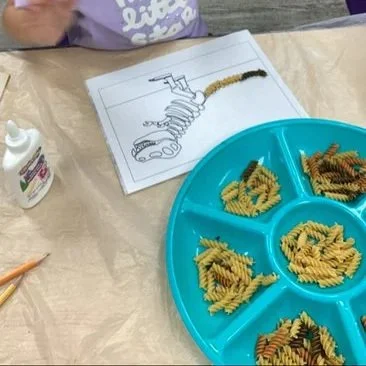
Our Pasta Fossils activity lets preschoolers create dinosaur skeletons using everyday materials in a hands-on STEAM project. Children print out pictures of dinosaur bones and then glue different shapes of pasta on top to build their own edible-inspired skeletons. This creative activity introduces children to fossil shapes, patterns, and anatomy while strengthening fine motor skills, hand-eye coordination, and early science thinking.
Kids learn to observe shapes, match pieces, and understand how skeletons form, making prehistoric creatures tangible and engaging. Perfect for fossil units, dinosaur lessons, or sensory-rich classroom activities that connect art, science, and play.
